Archives
- 2026-06
- 2026-05
- 2026-04
- 2026-03
- 2026-02
- 2026-01
- 2025-12
- 2025-11
- 2025-10
- 2025-09
- 2025-03
- 2025-02
- 2025-01
- 2024-12
- 2024-11
- 2024-10
- 2024-09
- 2024-08
- 2024-07
- 2024-06
- 2024-05
- 2024-04
- 2024-03
- 2024-02
- 2024-01
- 2023-12
- 2023-11
- 2023-10
- 2023-09
- 2023-08
- 2023-06
- 2023-05
- 2023-04
- 2023-03
- 2023-02
- 2023-01
- 2022-12
- 2022-11
- 2022-10
- 2022-09
- 2022-08
- 2022-07
- 2022-06
- 2022-05
- 2022-04
- 2022-03
- 2022-02
- 2022-01
- 2021-12
- 2021-11
- 2021-10
- 2021-09
- 2021-08
- 2021-07
- 2021-06
- 2021-05
- 2021-04
- 2021-03
- 2021-02
- 2021-01
- 2020-12
- 2020-11
- 2020-10
- 2020-09
- 2020-08
- 2020-07
- 2020-06
- 2020-05
- 2020-04
- 2020-03
- 2020-02
- 2020-01
- 2019-12
- 2019-11
- 2019-10
- 2019-09
- 2019-08
- 2019-07
- 2019-06
- 2019-05
- 2019-04
- 2018-07
-
This investigation est http www
2019-08-09
This investigation establishes that there is a genetic difference in the enolase loci that correlates with both vegetative growth and virulence phenotypes. DNA sequence analysis of enolase loci from seven P. larvae strains reveals a single SNP that alters the protein sequence at position 331 (Table
-
HOIP s ability to build linear Ub chains arises
2019-08-09
HOIP\'s ability to build linear Ub chains arises from a unique domain that follows directly after the RING2 domain, the linear ubiquitin chain-determining domain (LDD) (Fig. 1). Structures have revealed that the LDD is structurally integrated into RING2, creating a single RING2–LDD unit (Fig. 2D) [4
-
br Methods br Results Our study focused on consecutive
2019-08-08

Methods Results Our study focused on consecutive postural adjustments (CPAs) between IS and BS (the shaded areas on Fig. 2); that is to say, the Rx kinetics that occur after the end of an upper limb movement. It was dedicated to examining the main features of CPAs and the influence of movement
-
br Materials and methods br Results br
2019-08-08
Materials and methods Results Discussion Human Chk, a member of the Csk-family, was initially cloned from two different megakaryocytic cell lines [2], [3]. Structural comparison of human Chk with human Csk shows that human Chk has the additional N-terminal unique domain [2], [3], [25]. Chk
-
br Introduction br Structure of the Ku heterodimer
2019-08-08
Introduction Structure of the Ku heterodimer associated to DNA The atomic structure of the Ku heterodimer, alone and bound to a small DNA fragment, was recently determined (Walker et al., 2001) and has significantly improved our understanding of DNA recognition by DNA-PK holoenzyme (Fig. 3). B
-
It is conceivable however that the distortion induced by
2019-08-08
It is conceivable, however, that the distortion induced by adozelesin in dsDNA may decrease the processivity of the translocating RecBCD enzyme so that it dissociates more frequently from adducted DNA relative to unmodified DNA. Premature termination from the DNA would also produce partially unwound
-
A range of inhibitors were
2019-08-08
A range of inhibitors were therefore synthesized containing either carboxylic U 46619 or ester functionality at the ‘tail’ group as well as variations in the ‘head.’ These were assayed in vitro using the DCIP assay for binding affinity against and human DHODH at 50μM, respectively (). Analysis of
-
Orange spotted grouper Epinephelus coioides is a coral
2019-08-08

Orange-spotted grouper (Epinephelus coioides) is a coral reef fish with a high commercial value in China and Southeast Asian countries. However, in recent years, various outbreaks of viral diseases have affected the grouper aquaculture industry (Wei et al., 2010). Specifically, Singapore grouper iri
-
Regarding the mechanism of action of CRF several
2019-08-08
Regarding the mechanism of action of CRF, several studies have shown that low doses of CRF may preferentially activate CRF1 receptors in glutamatergic projection neurons, serotoninergic neurons or glutamatergic collaterals in the medial prefrontal cortex (Vertes, 2004). Indeed, prosencephalic inacti
-
The present study was the first to examine how COMT
2019-08-08
The present study was the first to examine how COMT genotype and estradiol are associated with flap inhibitor functioning in healthy postmenopausal women. We hypothesized that with decreased circulating estradiol after menopause, the COMT genotype relationship to cognition would remain and perhaps
-
br Results and discussion br Conclusions We
2019-08-08
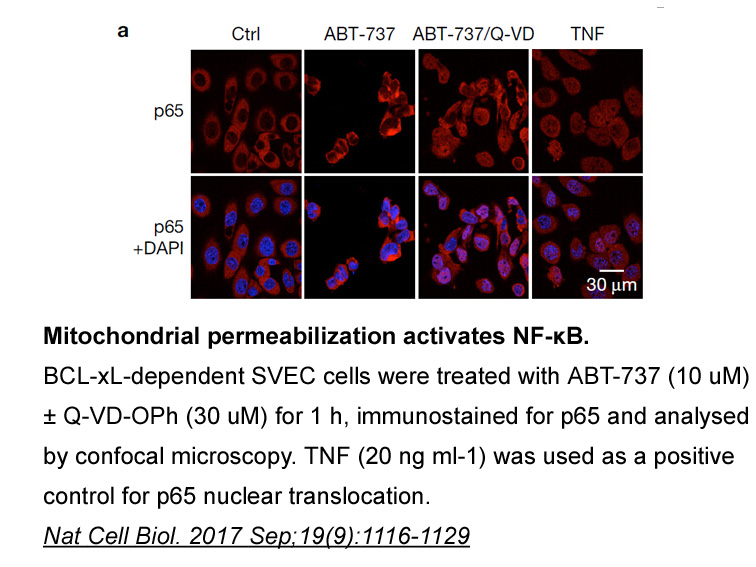
Results and discussion Conclusions We have developed a method to produce wildtype and mutant Ric-8A proteins from E. coli that can be phosphorylated at the regulatory protein kinase CK2 phosphosites to near homogeneity. The phosphorylation status and activity of the purified Ric-8A proteins w
-
Nowadays it is possible to detect the AChE inhibitors by
2019-08-08
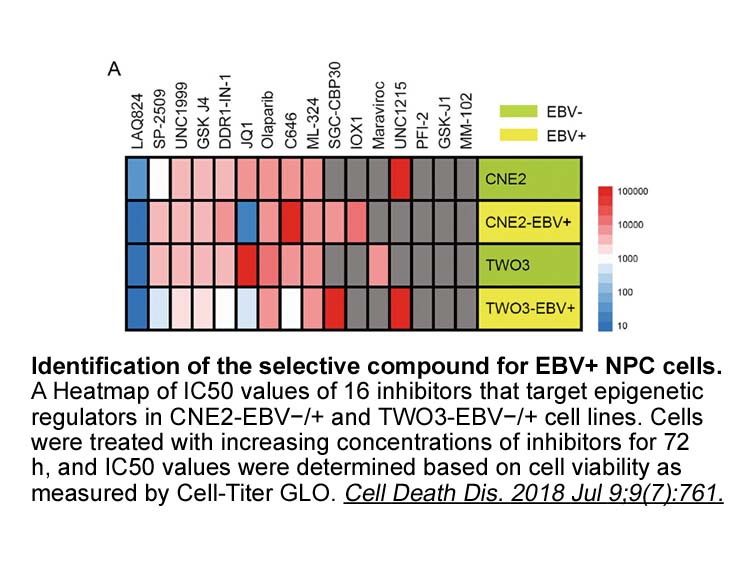
Nowadays it is possible to detect the AChE inhibitors by several methods such as gas chromatography-mass spectrometry [11], ion mobility spectrometry [12] and lab-on-chip devices [13,14]. However, almost all instrumental detection techniques that are able to conclusively determine the presence of th
-
The ultrafiltration approach has been used to measure equili
2019-08-08
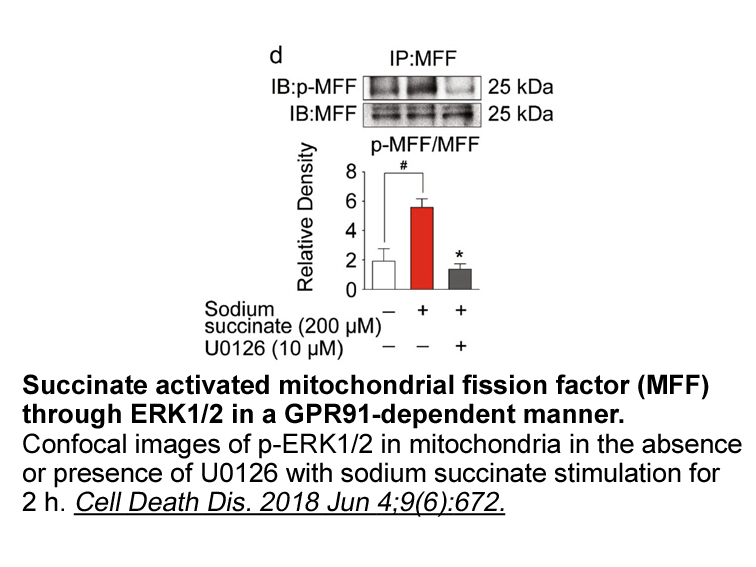
The ultrafiltration approach has been used to measure equilibrium BIEs for a number of enzyme systems, including o-Phenanthroline manufacturer hexokinase (Lewis and Schramm, 2003a, Lewis and Schramm, 2003b), thymidine phosphorylase (Birck & Schramm, 2004), purine nucleoside phosphorylase (Murkin, Ty
-
The importance of AAE in enhancing
2019-08-08
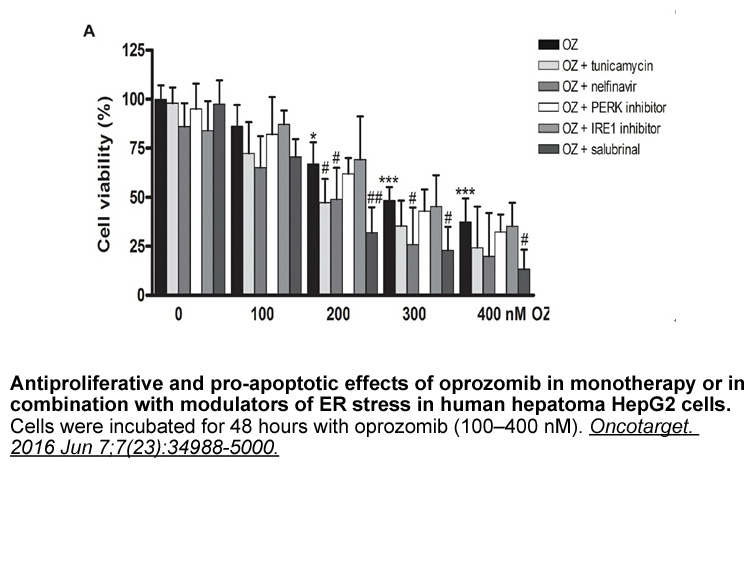
The importance of AAE3 in enhancing the survival of plants and yeast when confronted with certain environmental stresses has been documented in recent reports. In response to biotic stress such as oxalate-secreting micro-organisms, AAE3 was found to reduce the inhibitory growth effects of the secret
-
It is interesting to note that Eibinger and colleagues
2019-08-08
It is interesting to note that Eibinger and colleagues [23] recently reported chemotactic movement to 25-OHC in THP1 cells as well as in primary human monocytes. RNA interference suggested that in part this migration was mediated by EBI2. Competing financial interest statement Acknowledgments
15737 records 993/1050 page Previous Next First page 上5页 991992993994995 下5页 Last page